Bulgaria's Startup Moment:WhatWe Learned
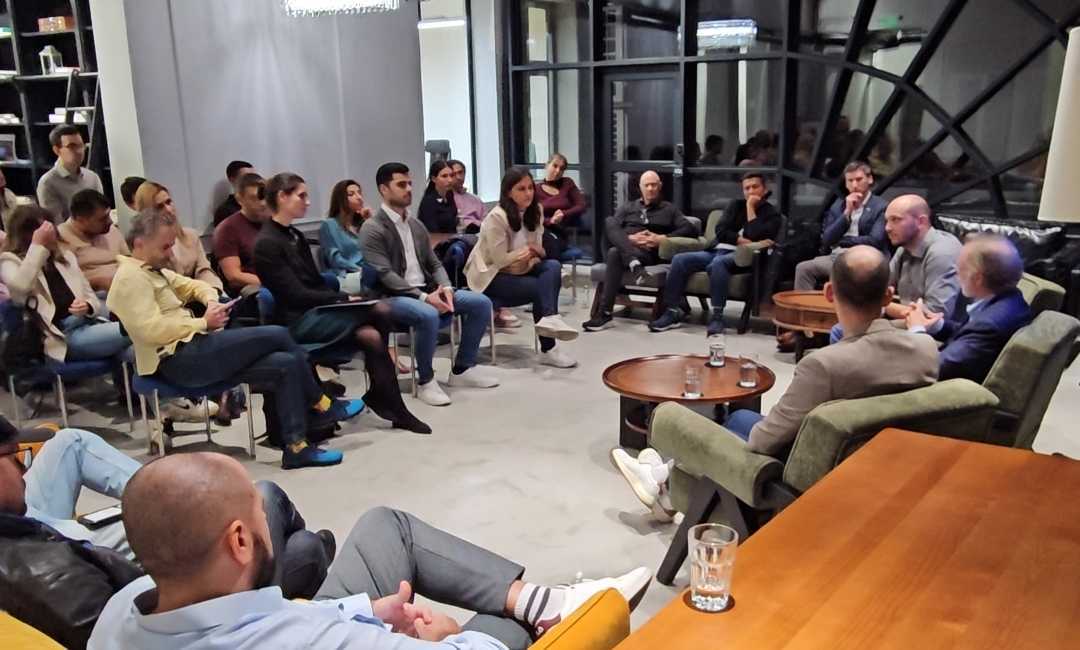
We had the U.S. Embassy in Bulgaria and Future Unicorns Accelerator over at Puzl CowOrKing for "Bulgaria's Startup Moment: Are We Ready to Go Global?".
On "stage" at our Winter Garden were Scott Fox, a Silicon Valley entrepreneur and angel investor; Anders Imboden, Economic Officer at the U.S. Embassy; Konstantin Kunev, CEO of Future Unicorns Accelerator; and Rangel Milushev, co-founder and CTO of Praven Intelekt, now Lexroom Bulgaria.
We took notes so you don't have to. Below are the four lessons we think every founder should steal.
1. VC math is brutal, and it isn't personal.
A venture fund backs around 100 companies. About 90 of them disappear. One turns into Uber and pays for everything else. That's the whole game, and it's why a VC needs every company it backs to have a real shot at a 50x or 100x return.
This is where a lot of local conversations go sideways. Founders here often aim for 3x or 5x, and some local funds do too. Scott didn't call that wrong. He called it a different game.
A five-person company doing 2 million a year is, in his words, "a pretty good life." That's success, and better than most businesses ever manage. It just isn't the kind of success a VC is built to fund, because the fund has its own costs and its own math to answer to.
So before you build a pitch deck, answer three questions honestly:
- What kind of success do you actually want?
- How much money do you have to get there?
- What's your timeline?
All of the answers can be right. Bootstrapping, angels and VC are different tools, not a ranking. Pick the one that fits the company you're actually building, not the one that sounds best on LinkedIn.
2. Not every investor is your investor
Bulgaria might not have that many investors, due to its size. The U.S. has tens of thousands of people who call themselves angel investors, maybe hundreds of thousands. Scott's point was that they are not interchangeable.
His example: you run an early-stage legal-tech AI company. You meet someone impressive who says he's an investor, so you go and pitch him. It turns out he backs late-stage aerospace. Nothing about your company fits what he does, however nicely you ask. You've wasted your time and his.
Scott's way of remembering it: "If you break your ankle, don't go to the dentist." Investing is a specialised field, like medicine. Before you reach out to anyone, check:
- Stage: do they write first cheques, or come in at Series B?
- Sector: have they backed anything like you before?
- Route in: who can introduce you? A referral beats a cold email every time.
It's boring homework. It also saves you months of polite meetings that were never going to go anywhere.
3. The cave strategy doesn't work
You know the plan. Hide for three years, build the perfect product, launch to applause. Rangel was blunt about it: "That never happens. That's just not how the world works."
His team at Praven Intelekt (Lovely Puzl members, of course) did the opposite, and it went fast:
- The founders had all built startups before, and they aimed past Bulgaria from day zero.
- They built a quick and dirty MVP in about a month and a half.
- They iterated with early users from the start, and found product-market fit almost immediately.
- They saw other, legal AI products like taking off in the U.S., and bet on Europe's many small, fragmented legal markets before the big players arrived.
- They launched in September and ended the year at close to 100K ARR, doubling as they went.
- As term sheets came in, Lexroom, an Italian company doing the same thing in Italy, asked to join forces. Joining them meant operating at a much bigger scale, much faster, alongside one of Europe's fastest-growing companies. Rangel called it a no-brainer.
The whole thing took about a year. His summary is worth putting on a wall: even if you have the perfect product, if nobody hears about you, nobody cares.
4. "We're from Bulgaria" is not an apology
Plenty of American investors couldn't find us on a map. Scott was honest about the effect: when people don't know a place, they tend to discount it.
He framed it as glass half full or glass half empty. You can walk into the room and say: "We're from Bulgaria. We do this, they do that, which means we have an opportunity like this."
Praven Intelekt is the example. On its own, a legal AI tool for a country of a few million people is easy to ignore. Teamed up with the Italians and covering more of Europe, it's something people notice.
Scott called it turning a vice into a virtue. He also admitted it's not an easy sell. But what else are you going to do?
What's next at Puzl
Thanks to the speakers, the U.S. Embassy in Sofia and Future Unicorns Accelerator, and to everyone who filled the room with good questions.
Next up: French Tech Sofia Afterwork is back at Puzl on Tuesday, October 20. This time it's the messy middle of building a company, not the highlight reel. Yann Delplancq, a former founder turned psychologist and mental performance coach, talks about failure and burnout. Gergana Stancheva, co-founder and COO of LAM'ON, shares what building a deep-tech alternative to plastics really looks like. Doors at 6:45 PM, talk at 7:00, drinks and networking from 8:00. Free, in English. Bring a friend and your questions.
And on Friday, October 23, we're taking over the rooftop of Barter Community Hub for Night of the Living NETwork, a Halloween networking night for founders, freelancers, developers, designers, marketers and investors. Drinks, music, costumes encouraged. Spots are limited, so register here.